The Role of Family in Effective Addiction Treatment Across Texas
Families do not create addiction, and they can not singlehandedly heal it. Yet in Texas, where kinship ties usually run deep and neighborhoods still gauge themselves by how they show up for each various other, family members can be decisive companions in recovery. When relative receive excellent guidance, learn new skills, and deal with themselves, they change the ecology around the individual in therapy. The home becomes less responsive, extra regular, and better aligned with the effort of healing. That change boosts the probabilities of sticking with care, navigating setbacks, and developing a life worth protecting.
Why family involvement relocates the needle
Treatment functions when it gets to right into daily life, not simply the treatment room. Households, broadly defined to consist of spouses, moms and dads, siblings, grandparents, close friends, and sometimes church participants or godparents, form daily life in concrete ways. They assist manage consultations, co‑pilot medications, reroute time and money, influence social circles, and mirror back what they see. Also a little change in your home, such as eliminating alcohol from the cupboard or agreeing on exactly how to take care of money, can steady early recovery.
In programs across Texas, I have viewed 3 points make the biggest difference. First, a person in the family takes responsibility for learning new tools rather than waiting on the person in treatment to do all the changing. Second, the household and the therapy group method clear communication, with consent, so surprises are rare and plans do not crumble at the initial grab. Third, assumptions are adjusted: regression danger is taken seriously, but regression is not treated as a moral failing. Family members that can stabilize responsibility with compassion tend to see much better long‑term progress.
How households affect outcomes, in practice
Consider a typical outpatient schedule in San Antonio or Houston: 3 evenings a week of team treatment, a regular private session, and arbitrary urine drug displays. That structure is breakable if the person goes home to a chaotic atmosphere. When relative find out to set predictable routines in the house, decrease arguing, and connect benefits to health and wellness goals, presence surges and food cravings ease. Little arrangements aid. No alcohol in common spaces. A curfew that respects early soberness. Adventures to night groups when driving is not yet secure. Back-ups for childcare. Predictable check‑ins before and after treatment sessions. These audio mundane, however they typically decide whether a person finishes 8 weeks of shows or drifts away after two.
This is not about surveillance. It has to do with getting rid of obstacles, protecting against preventable stress, and lining up assistance with the therapy strategy. Succeeded, family members involvement additionally safeguards the household itself from exhaustion and resentment. When moms and dads or partners stop attempting to anticipate every crisis and rather adhere to a clear playbook, their very own sleep enhances, high blood pressure decreases, and they reclaim a feeling of control.
The first call, consent, and ethical boundaries
Family interaction begins the minute somebody calls a clinic or a situation line. Several programs in Texas, consisting of those in Bexar, Harris, and Travis counties, get calls from moms and dads and companions prior to the individual prepares to enlist. Excellent programs listen, supply instant assistance to the caller, and explain what can and can not be shared without approval. They additionally instructor the customer on how to welcome the person into treatment without shaming or collaring them.
Privacy laws are not barriers to household work, they are guardrails. With an authorized launch of information, teams can share schedules, presence, and security problems, and they can get observations from household that aid identify regression early. Without approval, groups can still offer education and learning to families about addiction, neighborhood sources, and self‑care. The most effective clinicians treat approval as a progressing conversation, revisiting it throughout stabilization and after situations. As trust fund expands, the private typically enables more household participation, not less.
Enabling versus reliable help
Every household duke it outs a variation of this. Where is the line in between support and making it possible for? In my experience, it comes down to operate, not judgment. Ask whether a particular activity moves the individual closer to healthy and balanced independence or helps the illness maintain its grip.
A moms and dad in Austin once described paying fundamental phone company as allowing. We reframed it: could the phone be limited to important telephone calls, with a low‑cost plan, to collaborate work and treatment? That little expense made it easier to offer evidence of presence to probation and work. On the various other hand, covering duplicated rent shortfalls with no conditions strengthened a pattern of utilizing and bailing out, and it exhausted the parent financially. We agreed that future rent assistance would be contingent on recorded session attendance, a written budget, and medication displays verified by the clinic. The family changed from reflex rescue to conditional support connected to recovery behaviors.
Two rules of thumb guide these decisions. Initially, do not function harder than the person in therapy. Second, do not secure them from the natural, legal, or economic effects of their actions, unless a life is in instant threat. Following these regulations takes technique, and occasionally a specialist in household sessions should referee strong emotions while the household try outs brand-new boundaries.
What solid Texas programs educate families
The content of family work matters as long as the intent. Throughout high‑quality addiction treatment in Texas, I seek five components in family programs. One, psychoeducation regarding substance use problems that is concrete and shame‑free. Two, communication abilities training, with role play that really feels uncomfortably genuine. Three, border setting linked to certain actions, not obscure promises. Four, regression avoidance planning that consists of overdose education and learning and naloxone training for family members impacted by opioids. 5, pathways for the family's own assistance, consisting of Al‑Anon, Nar‑Anon, or secular teams, and referrals for private counseling when trauma or clinical depression is present.
Several evidence‑informed methods fit these objectives. CRAFT coaching helps families invite a liked one right into treatment by enhancing healthy and balanced options instead of saying regarding using. Family members Behavior Therapy provides stepwise plans for backup administration at home. For teens, multidimensional family members treatment can align moms and dads, institutions, and probation policemans so the teenager is not whipsawed by combined expectations. None of these models is a magic trick. They work when facilities tailor them to real houses, which might include cousins, grandparents, or a church senior that is main to decision‑making.
Inside San Antonio: culture, army life, and useful help
Addiction treatment in San Antonio has certain rhythms. Armed forces solution forms the city, numerous households are navigating privacy with the Division of Defense or the VA, return from release, and the stigma of seeking help within the rankings. Facilities that serve Joint Base San Antonio family members do well when they coordinate with army case supervisors, clarify how Command notice rules differ for active duty versus dependents, and plan around obligation hours. Spouses usually lug heavy tons, managing child care and clinical visits. Offering night family groups and child watch during sessions can make or damage attendance.
San Antonio is additionally a happily bilingual city. Family members programs that provide Spanish and English materials by default, not as an afterthought, see stronger interaction. That consists of translating safety plans, reviewing healing language that appreciates the family's ideas, and being truthful regarding migration concerns without transforming sessions into lawful suggestions. In practice, this can be as straightforward as an intake manuscript that asks, That else helps choose for your house, and what language really feels most comfortable for family meetings?
Faith communities play an actual function below. Priests, deacons, youth priests, and lay leaders commonly act as initial -responders before specialists get in the photo. When treatment groups welcome faith leaders to marked household evenings, with the person's consent, those leaders learn to urge treatment compliance while still supplying spiritual care. Nobody has to pretend that prayer will certainly change buprenorphine or therapy. They can rest side by side.
Rural counties, boundary communities, and the challenge of distance
Texas location complicates family members participation. A parent in Uvalde or a spouse in the Panhandle might be 3 hours from the nearby extensive outpatient program. Border towns add cross‑jurisdictional stress, language barriers, and seasonal job routines. Telehealth family sessions assist, but they are not enough. Programs that do well over distance do 4 points consistently. They consolidate appointments to minimize journeys, timetable household sessions during the exact same block as specific treatment, educate families exactly how to utilize basic telehealth tools without pity, and established quick‑response networks for problems in between sessions, for example a nurse line for medicine concerns or same‑day coaching if a safety plan could be needed.
Transportation vouchers, gas cards, or sychronisation with region indigent programs are not luxuries. They are the distinction between a grandparent going to the vital 3rd family members session or staying at home due to the fact that the storage tank is vacant. In several areas, probation divisions will enable digital check‑ins if the therapy program validates involvement, which saves family members both time and face.
Courts, CPS, and sincere coordination
Many Texas households get in therapy with court orders or Youngster Protective Services participation. Family members feel viewed and evaluated. Therapy companies occasionally really feel captured in the middle. The means through is clear contracts and foreseeable paperwork. I encourage family members to authorize releases that permit the center to send presence, drug screen results, and treatment summaries to probation police officers or CPS caseworkers. That enhances expectations and minimizes shock hearings. It additionally means the family is not the sole messenger for development, which decreases dispute at home.
There is a human component here. I remember a grandma in Laredo that ended up being the kinship caretaker when CPS intervened. She was tough, anxious, and exhausted. The facility used a regular monthly instance meeting that included her, the CPS employee, the specialist, and the mom's lawyer. Meetings were not comfy. Yet they made decisions faster and had fewer misconceptions. The mommy finished programs, fell back once, re‑engaged, and kept safekeeping under guidance. The grandmother later on said the very best component was not having to presume who knew what.
Medications for addiction, and household myths
Medications for opioid use problem, consisting of buprenorphine and methadone, save lives by cutting overdose risk and maintaining mind chemistry. Extended‑release naltrexone can aid with alcohol and opioids. Households often resist drugs since they fear substitution or have actually listened to half‑true tales about abuse. Clear education aids. The dosage is tailored to the person, yearnings decrease, and individuals gain back the bandwidth to work and parent. Member of the family can sustain adherence by driving to the facility when needed, preparing for drug store refills before weekends or vacations, and commemorating milestones like 3 months of consistent dosing.
Medications are not a free pass. They work best when paired with treatment, framework, and recuperation activities. However I have actually seen moms and dads change their position when they view a son on buprenorphine turn up to work, pay his phone bill, and have fun with his children rather than chasing after tablets. Their relief is apparent. Family members deserve that relief.
Paying for treatment and making the system benefit you
Insurance insurance coverage and public programs in Texas are a patchwork. Business plans vary extensively in network gain access to. Medicaid covers several solutions for eligible members, yet not all facilities are registered. County‑funded choices exist, commonly with waitlists. Family members can take a number of actions to get farther, faster. Call the number on the insurance coverage card and ask a benefits rep to email a listing of in‑network addiction treatment suppliers, not just behavioral health and wellness generally. Request for prior consent requirements in writing. If waitlists are long, request acting solutions such as specific teletherapy or medication analysis while waiting on a greater level of treatment. For uninsured individuals, ask neighborhood programs regarding gliding scales and area agreements, and inspect whether state‑funded ports focus on expecting individuals or veterans.
An usually ignored action is to involve the company. Many Texas companies have Employee Help Programs that cover short‑term counseling and navigation help. Human resources can in some cases collaborate leave under FMLA or short‑term special needs. Family members are typically the ones that make these calls when https://rylanvhek095.fotosdefrases.com/san-antonio-addiction-treatment-how-to-pick-the-right-specialist the individual in treatment feels overwhelmed by paperwork.
Planning for regression, overdose, and re‑entry
Hope without a strategy is brittle. Relapse preparation should be routine, not an indicator of pessimism. Households can assist prepare a straightforward playbook that covers indication, the first 3 contact us to make, and what actions to take after a slip. The plan must include who can take the kids for a night, who can protect medicines or cash if required, and where the nearby drug store stocking naloxone lies. In lots of Texas areas, drug stores can dispense naloxone without a private prescription. Some cops departments and community organizations also give free packages and short training. Maintain kits in places where life happens, such as the kitchen area and the glove box.
After a lapse, family members must expect the therapy plan to adjust. That may suggest a lot more constant treatment, different medicines, or a brief move to a higher degree of care. It is not failure. It is comments. The household's voice can aid the group recognize what stress or triggers remained in play.
A portable household readiness checklist
- Know the treatment schedule and exactly how to get in touch with the team in a crisis, with consent in place.
- Remove apparent triggers at home and settle on a couple of clear limits you can in fact enforce.
- Learn basic communication abilities: brief, certain requests and nonreactive responses.
- Get naloxone, discover exactly how to use it, and placed it where you will keep in mind it.
- Join your own support group or counseling so the home does not revolve around a single person's illness.
How Texas programs can elevate the bar on family work
- Offer multilingual family teams as a default in cities like San Antonio, El Paso, and the Valley.
- Align household sessions with job hours, and give childcare during night groups when possible.
- Train personnel in CRAFT and backup administration so family members discover sensible devices, not platitudes.
- Establish rapid‑response networks for family members concerns to prevent situations from rising in between visits.
- Formalize partnerships with confidence neighborhoods, army instance managers, and county courts to decrease combined messages.
Two vignettes from the field
A daddy in Northeast San Antonio called a facility three times before his child consented to satisfy a therapist. The counselor coached the dad utilizing CRAFT concepts. He changed from late‑night talks to calm, specific invitations connected to what mattered to his boy: keeping a construction work and paying off an automobile. He offered trips to early consultations, set a curfew, and quit covering over-limit fees. The son still used for a couple of weeks, after that agreed to start buprenorphine after missing out on 2 days of job as a result of withdrawal. The papa attended family team on Tuesdays, discovered to hold his ground without inflammatory language, and mounted a safe for cash money and medications at home. 8 months later on, the kid had not used opioids, had one alcohol slip he reported the next day, and was still in once a week therapy. The dad claimed the hardest component was letting natural consequences land instead of suggesting. The most effective component, in his words, was obtaining his weekend breaks back.
In the Panhandle, a grandma caring for 2 grandkids encountered a 90‑minute drive to the nearby extensive outpatient program. The facility compressed sessions to 2 evenings each week with longer blocks, provided gas cards from a neighborhood foundation, and did household treatment by video on alternative weeks. A regional pastor signed up with 2 sessions at the grandma's demand. The mother relapsed after 4 months, utilized methamphetamine for 5 days, after that texted her counselor because the safety strategy was actually taped to the refrigerator. She returned to care, this time with stimulant‑specific methods and responsibility around phone usage. The grandmother maintained her boundaries: no late‑night visitors, no money, and medicine screens before the mommy might drive the kids. The case never ever really felt tidy. It still worked.
Culture and worths as properties, not obstacles
Texas households commonly bring strong confidence, regard for elders, and commitment to the table. These can be funnelled into stubborn persistence when therapy gets monotonous or hard. A mother's insistence that her boy greet his grandparents weekly can function as a recovery routine that keeps him anchored. A daddy's concern concerning household reputation can be reframed as a reason to protect development, not a factor to conceal problems. Clergy who comprehend addiction can teach both mercy and limitations, blessing those who look for help and backing parents that set strong regulations at home.
Professionals often fret that family members worths will clash with evidence‑based care. More frequently, worths draw in the same direction once the family sees exactly how treatment and medicines offer the person they like. The trick is to framework therapy as a method of living out what the family already thinks, not as a denial of it.
When the family belongs to the problem
Sometimes the household carries its very own addiction, physical violence, or untreated mental disease. In these situations, the safest option is not to involve everybody just as. Medical professionals may invite only particular participants to sessions, perform safety and security planning without divulging addresses, and connect the individual in treatment to sober living or healing real estate if home is risky. Family members with energetic domestic physical violence requirement different services and clear safety and security methods. If Child Protective Services is entailed, the treatment team ought to collaborate to make sure that family sessions are not made use of to stress or frighten the individual in care.
I when dealt with a girl in Dallas whose partner sabotaged her development by bringing tablets right into the home after cash advances. The group helped her transfer to a women sober residence for ninety days, established payee setups so rent was instantly moved, and postponed pairs therapy up until the guy took part in his very own treatment. That decision shielded her progress and stayed clear of rehearsing the same fight in front of a therapist.
What success looks like
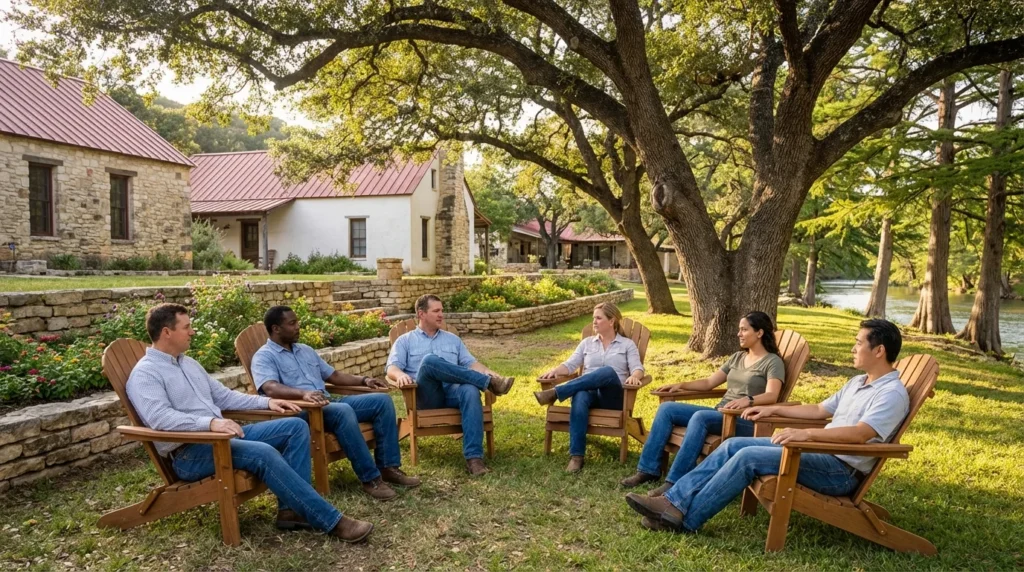
Success is not an ideal household tableau. It is fewer crises, even more honesty, and a household that can withstand anxiety without collapse. It is a partner who understands exactly how to support medicine adherence without becoming a warden. It is a moms and dad who can sit through pain without transforming it right into a showdown. It is teenagers who understand enough about addiction to quit taking it personally. It is expanded family members that celebrate a year of soberness with a barbecue that supplies sparkling water and a lot of leaves if someone really feels overwhelmed.
I have seen family members in Houston's East End, South San Antonio, and villages along Freeway 59 grow into these duties. They did not do it alone. Programs that treat families as partners, not bystanders, make the distinction. Those programs convert therapy objectives into everyday regimens and coach individuals waiting at home.
Addiction treatment across Texas is more powerful when it is rooted in the lives people really live. The range in between a counselor's workplace and a kitchen area table in Floresville or a church basement in Harlingen reduces when families learn practical skills, discover to endure discomfort, and recognize their own limits. For anybody looking for addiction treatment in San Antonio or somewhere else in the state, ask early how the program will include your family members, what that will look like week to week, and what sustain your family members will obtain for themselves. The right answer is specific. It names times, formats, and tools. It appreciates personal privacy while maintaining the doors open.
Families can not bring recovery on their backs. They can establish the stage so the individual they love has a fair shot. In Texas, where family members still rally for landmarks and collect for tough news, that type of constant support is an all-natural fit. When it is paired with strong medical care, it turns into one of the most trustworthy predictors of a life rebuilt.
Ends · ZANEBBPY988